Item
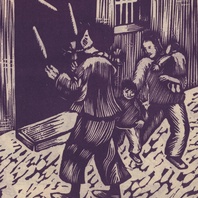
Fengyang guniang (Maidens of Fengyang)
This woodcut, by an artist called Fang Wenxing, was reproduced in Zhonghua huabao (Chinese Pictorial) 1.4 (November 1943). The importance of the muke (woodcut) form to artistic practice in occupied China has been almost entirely overlooked in the literature. The muke form has hitherto been associated with the art of resistance in China, despite being an important part of “occupation” visual cultures as well.
Read More
Item
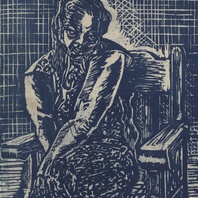
Furen xiang (Portrait of a woman)
This woodcut, by an artist called Ma Wu (probably the most prolific of Chinese popular artists openly active during the Japanese occupation), was reproduced in Zhonghua huabao (Chinese Pictorial) 2.2 (March 1943). The importance of the muke (woodcut) form to artistic practice in occupied China has been almost entirely overlooked in the literature. The muke form has hitherto been associated with the art of resistance in China, despite being an important part of “occupation” visual cultures as well.
Read More
Item
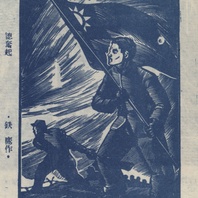
Zong fenqi (Uprising)
This woodcut, by an artist called Tie Ying (lit. “iron eagle”), was reproduced in Zhonghua huabao (Chinese Pictorial) 2.2 (March 1944). The importance of the muke (woodcut) form to artistic practice in occupied China has been almost entirely overlooked in the literature. The muke form has hitherto been associated with the art of resistance in China, despite being an important part of “occupation” visual cultures as well. In this case, the image of Chinese men, dressed in their “New Citizens Uniforms” (Xin guomin zhifu) and waving the ROC flag as they run into battle against enemies unseen, looks almost identical to early wartime resistance muke.
Read More
Item
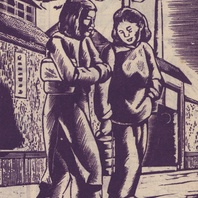
Shang gong (Off to work)
This woodcut, by an artist called Gu Yihua, was reproduced in Zhonghua huabao (Chinese Pictorial) 1.4 (November 1943). The importance of the muke (woodcut) form to artistic practice in occupied China has been almost entirely overlooked in the literature. The muke form has hitherto been almost exclusively associated with the art of resistance in China, despite being an important part of “occupation” visual cultures throughout the war.