Featured Item
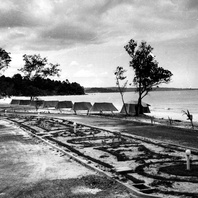
Beach promenade, Sihanoukville
The photograph is part of the collection that was donated to the National Archives of Cambodia from the Library of the Royal University of Fine Arts by Darryl Collins and Helen Grant Ross in 2003. The collection was used by Collins and Ross for their research into urbanisation. The images were probably originally used to mount the Sangkum Reastr Niyum Permanent Exhibition at the Exhibition Hall, Bassac area, Phnom Penh.
Read More

Case Study
日佔中國(1937-1945)
Read More
Person
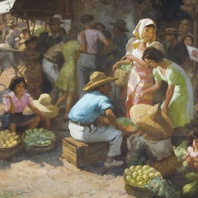
Kim Weir
Read More
Item
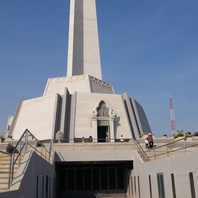
Win-Win Monument
The Win-Win Monument obelisk (33 metres in height) – photographed here in January 2020 – is part of the monumental complex inaugurated in December 2018 to mark the twentieth anniversary of the end of the post-Democratic Kampuchea civil war, with the final defection of the remaining Khmer Rouge factions, thanks to the DIFID policy (“Divide, Isolate, Finish, Integrate, Develop”) also known as the “Win Win” policy of Prime Minister Hun Sen.
Read More
Essay
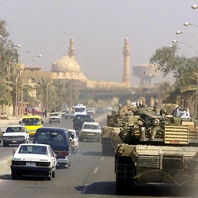
Bodies of Occupation: Roundtable – Frankenstein in Baghdad
Roundtable on Ahmed Saadawi’s Frankenstein in Baghdad Ahmed Saadawi’s novel Frankenstein in Baghdad (Oneworld Publications, 2018 [2013]), a take on Mary Shelley’s famous book, serves as a metaphor for cyclical violence and the precariousness of daily life in Iraq under American occupation. It tells the story of the Whatsitsname, a creature made of the limbs of people who died in terror attacks in Baghdad. Prompted by the death of a friend, junk dealer Hadi collects and sows these body parts together to form a “complete” body that can be given a proper funeral. Unsurprisingly, his attempt goes awry. Possessed by the spirit of one of the dead, the Whatsitsname goes on a killing spree to avenge the innocents whose flesh it is composed of. When the revenge has been carried out, the body part drops off and must be replaced with fresh ones. As the line between victims and perpetrators becomes murkier, the Whatsitsname realises that its mission is just an endless and pointless task. Saadawi’s creature is more than the sum of its parts. It is a monstrous, more-than-human body whose ongoing reconfiguration reflects the ever-changing reality of occupation itself. As such, the Whatsitsname is not only an alternative epistemology or a stratigraphical instrument of exploration, but also the entry point into the becoming of occupation. Participants Jonathan Luke Austin is Assistant Professor of International Relations at the University of Copenhagen. He is also Lead Researcher for the Violence Prevention (VIPRE) Initiative at the Graduate Institute of International and Development Studies, Geneva. Austin’s research agenda is currently orientated around four main axes: i. the ontology and microsociology of political violence; ii. the relationships between technology, design theory and world politics; iii. the political status of aesthetics, and; iv. the contemporary state of scientific critique. Alongside these foci, Austin possesses a decade of research and field experience in the Middle East (Syria, Lebanon, Iraq) and regularly consults for NGOs and the media on current events. He has contributed to essays collections, reports, and journals such as Frame: Journal of Literary Studies, Security Dialogue, European Journal of International Relations, and International Political Sociology. He is currently working on two books, Small Worlds of Violence: A Global Grammar for Torture and Unmaking Global Violence (his website). Dom Davies is a Senior Lecturer in English at City, University of London, where he is also the Programme Director for the BA English. He holds a DPhil and British Academy Postdoctoral Fellowship from the University of Oxford. He is the author of two books, Imperial Infrastructure and Spatial Resistance in Colonial Literature, 1880-1930 (2017) and Urban Comics: Infrastructure and the Global City in Contemporary Graphic Narratives (2019), along with many articles and book chapters broadly in the field of colonial and postcolonial writing, visual culture, and critical infrastructure studies. He is the co-editor of Planned Violence: Post/Colonial Urban Infrastructure, Literature & Culture (2018) and two other edited collections. He is currently writing a trade book about the cultural, regional, and post-imperial politics of the British government’s “levelling-up agenda”, which is due out with Lawrence & Wishart in 2022 Kobi Kabalek is Assistant Professor of Holocaust Studies and Visual Studies in Germanic and Slavic Languages and Literatures and Jewish Studies, Penn State University. He earned his PhD in history from the University of Virginia, with a dissertation on “The Rescue of Jews and the Memory of Nazism in Germany” (2013). In 2014-2017, he was a post-doctoral fellow at the Hebrew University in Jerusalem as part of the ERC project “Experience, Judgment, and Representation of WWII in an Age of Globalization”, and examined conflicting perspectives concerning the war in Mandatory Palestine and their impact on the postwar historiography of Israel and Zionism. His research focuses on historical perceptions, moral sentiments and memory in film, literature, auto/biography, oral narratives, art, etc., in German, Israeli, and global Holocaust history. He currently explores marginalized and extreme phenomena in Holocaust testimonies, historical writing, and popular culture – with special attention to the role of fantasy, imagination, and horror – and their impact on our understanding and representation of the Holocaust. Rúben Leitão Serém is an Assistant Professor in History at the University of Nottingham since 2019. He specialises on the social history of the Spanish Civil War of 1936-1939, General Franco’s dictatorship (1939-1975), and its traumatic legacy in present-day Spain. A fan of microhistory and memory studies, Rúben has studied the origins, course, and reverberations of this brutal conflict in southern Spain, subsuming it into the wider historiography of nationalism in twentieth-century Iberia. More recently, Rúben has focused his research on the so-called “memory wars” in twenty-first-century Spain, in particular, on their social and cultural ramifications, and their use to feed several – and antipodal – nationalistic waves within the country (Spanish and Catalan nationalism). With around 100,000 victims of the civil war still lying in mass graves all over the country, from roadside ditches to mines and wells, Spain is presently only second to Cambodia in the total number of disappeared citizens. Deep and bitter divisions persist on how to deal with these bodies, for their presence and visibility has the power to erode the political consensus established during Spain’s transition to democracy during the 1970s. At a social level, the undignified status of the dead has only served to augment the trauma experienced by survivors and their descendants. In this respect, Franco’s project to instil fear and divide the nation lives on long after the death of its architect, finding nourishment on its executed victims. Rúben is the author of Conspiracy, Coup d’état and Civil war in Seville, 1936-1939: History and Myth in Francoist Spain (Eastbourne: Sussex Academic Press, 2017). More recently, he has published “Muerte y miseria en la «Ciudad de Dios»: El virreinato de Queipo de Llano en Sevilla” in Del Arco Blanco, Miguel Ángel (ed), Los «años del hambre»: Historia y memoria de la posguerra franquista (Madrid: Marcial Pons, 2020). Rúben is currently working on the involvement of the ultranationalist Portuguese Estado Novo dictatorship in the Spanish Civil War. Annie Webster studied English and Related Literature at the University of York and Arabic at the University of Edinburgh before completing her Wolfson-funded PhD on post-2003 Iraqi fiction at SOAS in 2020 with a thesis titled Stories of Creative Destruction in post-2003 Iraqi Fiction. She has since been teaching modern Arabic literature at King’s College London and the University of Cambridge. She has published a number of articles on contemporary Iraqi literature, including “Ahmed Saadawi’s Frankenstein in Baghdad: A Tale of Biomedical Salvation?” in Literature and Medicine (2018), “Indexing War: The Craft of the Catalogue in Sinan Antoon’s The Book of Collateral Damage” in Wasafiri (2021), and a chapter on literary depictions of occupied Baghdad forthcoming in The Routledge Companion of Literary Urban Studies. She has also contributed pieces to the TORCH blog, the MULOSIGE blog, and Arablit.org. More recently, she has developed an interest in contemporary Iraqi art which she has written about for ArtsCabinet.org, and is working with the artist Hanaa Malallah on the forthcoming exhibition “Co-Existent Ruins” (SOAS, 2022). She is currently preparing a monograph from her thesis which explores how contemporary Iraqi literature commemorates the human and environmental fallout of the 2003 Iraq War. Investigating how these texts have been incorporated into the international literary marketplace and framed by neoliberal paradigms of empathy, she draws attention to the various modes of linguistic, cultural and material translation that these texts undergo. She also highlights intertextual links with classical Arabic literature that have thus far been overlooked. More broadly her research explores political and literary ecologies of war. https://hamadtrainingcenter.com/ https://keepod.it/ https://orologilegno.it/ https://metaldetectoronline.it/ https://winestation.it/ https://armandotravaglini.it/ https://digitalmarketingturistico.it/ situs slot https://rolandonaorla.com.br/ https://gotodigitally.it/ situs togel online situs slot https://ftmm.com.pk/ slot online https://trginc.in/ https://punjabharyanahighcourtbar.in/ situs slot https://angelinagulshanspa.com/ slot gacor https://rockequipinc.com/ https://estudiodedanzaesperanzadelosreyes.com/ https://123jumping.com/ https://hancockcrimestoppers.org/ https://neuroscienceresearchlab.org/ slot dana https://utu.io/about-us/ https://gramercyglobal.com/ https://dunrobinchristianacademy.com/admissions/ https://www.peacenetkenya.or.ke/ https://pepelearningstudyportal.com/ situs slot gacor https://www.ghutnajivak.com/blog/ https://shreeuniqueschool.com/ https://shreetherapy.com/ https://pepwhiz.com/ https://gamanielblanco.edu.pe/ slot88 https://www.sitfoundation.org/ slot gacor https://peptextandmore.com/ https://kronologi.asia/ https://fjcm.co.uk/ slot88 https://enfoca.com.mx/ Terminal4d https://skytoursegypt.com/ https://www.la-flute-en-chantier.com/ https://www.erflandscaping.co.uk/ https://sherrylynnespinosa.com/ https://nepalmarathons.com/ https://cciadvisory.org/ https://levelup-skills.eu/courses/ https://akblueservices.com/ situs slot https://signaturestyling.co.nz/ situs slot https://vtu.ac.in/ https://noorconventioncentre.com/contact-us/ https://dmch.gov.bd/ https://janpeterschulz.de/ https://www.heizmax.de/ https://lkcillc.com/ situs slot https://www.csdpune.org/ https://noorconventioncentre.com/social-events-brampton/ https://www.csdpune.org/about-us/ https://www.csdpune.org/contact/ https://www.gemg.org.au/conference/ https://www.demarengineers.com/ https://www.sriindiahome.com/ https://sanjoseedu.org/ https://quebradasyauco.org/ https://tap.bio/@terminal4dgacorr https://rosariocialesedu.org/ https://rosariovegabajaedu.org/ situs slot slot terminal4d https://minatpay.com/ https://bethewine.es/ https://www.schopenhauer-sprachschule.com https://rustomjeeurbanwoods.com/ situs slot situs slot https://www.petlovers.com.ng/ situs slot online situs slot https://letskini.com/ slot dana link slot gacor https://cmed.com.bd/ situs slot https://dezignxpert.com situs slot https://www.repmextv.com/ https://www.rimroadanimalhospital.com/radiology
Read More
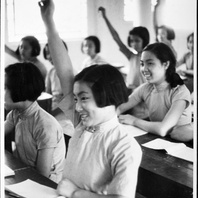
Item
Japanese language is exclusively used in the classroom
From a collection of staged photographs produced under the title “Life at a Girls School in Peking”, and produced at the Peking Jiyu Gakuen in Japanese-occupied Beijing. The original caption reads: “Japanese language is exclusively used in the classroom”.
Read More
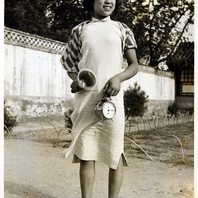
Item
“Great housewife” with the school bell [sic]
From a collection of staged photographs produced under the title “Life at a Girls School in Peking”, and produced at the Peking Jiyu Gakuen in Japanese-occupied Beijing. The original caption reads: “The girls have to bring the bell in turn every day with the title of ‘great housewife’. Chinese girls have no conception of TIME but they know morning, noon and evening. Teaching the idea of time is the first fundamental step towards a better education [sic]”.
Read More
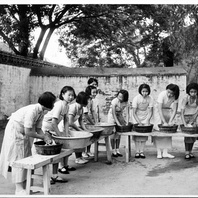
Item
Washing hour
From a collection of staged photographs produced under the title “Life at a Girls School in Peking”, and produced at the Peking Jiyu Gakuen in Japanese-occupied Beijing. The original caption reads: “Evidently the girls are enjoying a ‘new domestic arts’ [sic]”.
Read More
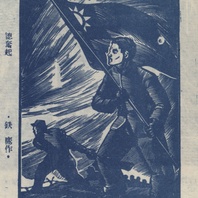
Item
Zong fenqi (Uprising)
This woodcut, by an artist called Tie Ying (lit. “iron eagle”), was reproduced in Zhonghua huabao (Chinese Pictorial) 2.2 (March 1944). The importance of the muke (woodcut) form to artistic practice in occupied China has been almost entirely overlooked in the literature. The muke form has hitherto been associated with the art of resistance in China, despite being an important part of “occupation” visual cultures as well. In this case, the image of Chinese men, dressed in their “New Citizens Uniforms” (Xin guomin zhifu) and waving the ROC flag as they run into battle against enemies unseen, looks almost identical to early wartime resistance muke.
Read More
Item
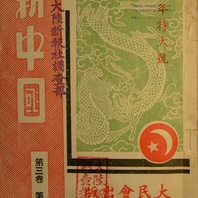
Xin Zhongguo (New China) cover, January 1940
This is the cover image of the magazine Xin Zhongguo (New China) 3.1 (January 1940), published by the Daminhui (Great People’s Association) in Nanjing. The Daminhui was a propaganda and mobilization organization established by the Japanese in 1938, which was later folded into Wang Jingwei’s Kuomintang (Nationalist Party). The Daminhui specialised in public expressions of support for the occupation, and employed a staff of Chinese organisers, artists, and writers. The sun-and-moon logo of the Daminhui can be seen on this magazine’s cover. The untitled woodcut image of the dragon is unattributed. It is included here to coincide with the New Year (which this issue of Xin Zhongguo celebrates). Significantly, text on the magazine’s cover suggests that this copy of New China was once owned by investigations department of the Japanese-language, China-based newspaper, the Tairiku Shinpō.
Read More
Item
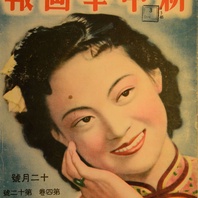
Xin Zhonghua huabao (New China Pictorial) cover, December 1942
This cover from the Xin Zhonghua huabao (New China Pictorial) 4.12 (December 1942) features an image of Li Lihua. Li was one of the most popular film celebrities in wartime Shanghai, and was favoured by the occupation regime in pro-government media. The New China Pictorial was a bilingual (Chinese-English) magazine published from 1939 through 1944 in Shanghai by the occupation journalist Wu Linzhi for distribution in China and throughout Southeast Asia.
Read More
Essay
“Angel of Peace (heping tianshi )”:Icon of Occupation in Wartime China
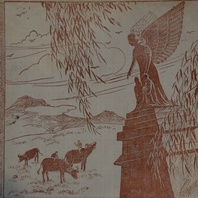
Henry Fehr’s Allied War Memorial listed here as the ‘God of Piece’ [sic], at some stage in the 1920s (Courtesy of the Historical Photographs of China Collection, University of Bristol).In pre-WWII Shanghai, one of the most recognisable landmarks on the city’s Bund had been Henry Fehr’s art nouveau Allied War Memorial, first erected in 1924, and featuring at its top a statue of a winged Victory. According to Robert Bickers, the monument was so dominant a sight in Shanghai that it made its way into the city’s culture. It even made an appearance in the 1937 film Street Angel (Malu Tianshi), directed by Yuan Muzhi.[1] This may help explain why the statue came to be referred to colloquially in the city either as the “Angel of Peace” (heping tianshi) or the “Victory Angel” (shengli tianshi) during the 1930s. As Paul Bevan has shown, the figure was also utilised in social and political cartoons by the likes of Zhang Guangyu in this same period.[2] The angel is featured overlooking a bucolic scene of water buffaloes, ox herds and willows in an unattributed drawing entitled “Dong Ya heping zhi leyuan” (Paradise of East Asian peace). This image was featured in the pictorial Dong Ya lianmeng huabao (Toa Pictorial) 1.4 (June 1941). Following the Japanese invasion of China in 1937, however, Fehr’s Victory was given a new significance for a variety of Japanese client states. Even prior to the establishment of the Reorganised National Government (RNG) in 1940, for example, the figure was worked into occupation propaganda in eastern China, with the notion of an “angel of peace” resonating with both Japanese client states set up in 1938 which promoted a negotiated peace with Japan, and with Wang Jingwei’s “Peace Movement” (Heping yundong) after 1939. Fehr’s figure was appropriated in the same year as into the cover design for one of the main vehicles for the Peace Movement in Shanghai, the periodical Gengsheng (Rebirth). Under the RNG, Fehr’s figure was transformed into an “goddess of peace” (heping nüshen), and was regularly featured in depictions of the Shanghai streetscape in RNG-sponsored graphic art. Indeed, the RNG “angel of peace” motif into the visual landscape of the RNG well beyond Shanghai, and wherever references to anthropomorphised peace were useful. In some instances, children dressed up as the “angel of peace” when publicly commemorating important dates on the RNG calendar. Elsewhere, Fehr’s monument was re-imagined in rural Chinese landscapes by RNG artists as a harbinger of RNG notions of peace. Unnamed boy dressed as the “angel of peace” (heping tianshi) during celebrations to mark the first anniversary of the founding of the Guangdong Provincial Government under Japanese occupation, May 1942. Ironically, with the “return” of the foreign concessions to RNG rule in 1943, the Japanese ordered that symbols of Western imperialism be removed from Shanghai’s streets. This, of course, included Fehr’s Allied War Monument (with Victory herself being removed, but her plinth left intact). The “angel of peace” thus provides us with an insight not simply into the eclectic origins of many of the symbols adopted by the RNG, and the creative ways in which this regime appropriated pre-war symbols of peace into a wartime cultures of occupation. It also illustrates the limits of RNG autonomy when it came to constructing visual cultures under foreign domination. [1] Robert Bickers, “Moving Stories: Memorialisation and its Legacies in Treaty Port China”, in Max Jones, et al (eds), Decolonising Imperial Heroes: Cultural Legacies of the British and French Empires (London: Routledge, 2016). [2] Paul Bevan, A Modern Miscellany: Shanghai Cartoon Artists, Shao Xunmei’s Circle and the Travels of Jack Chen, 1926-1938 (Boston: Brill, 2016), 267.